



Products
Pallet Wrapping Machines
INQUIRYPallet wrappers
Pallet wrappers are designed to secure finished products with stretch film before storage or transportation. A properly wrapped pallet is more stable, protected against dust and moisture, and less prone to product shifting during transport.
Depending on the production volume, product type, and level of automation, it is possible to choose from various types of wrappers – from simple semi-automatic machines to fully automatic systems integrated into production lines. Specialized solutions are also available for heavy, unstable, or non-standard loads, as well as for food companies with high hygiene requirements.
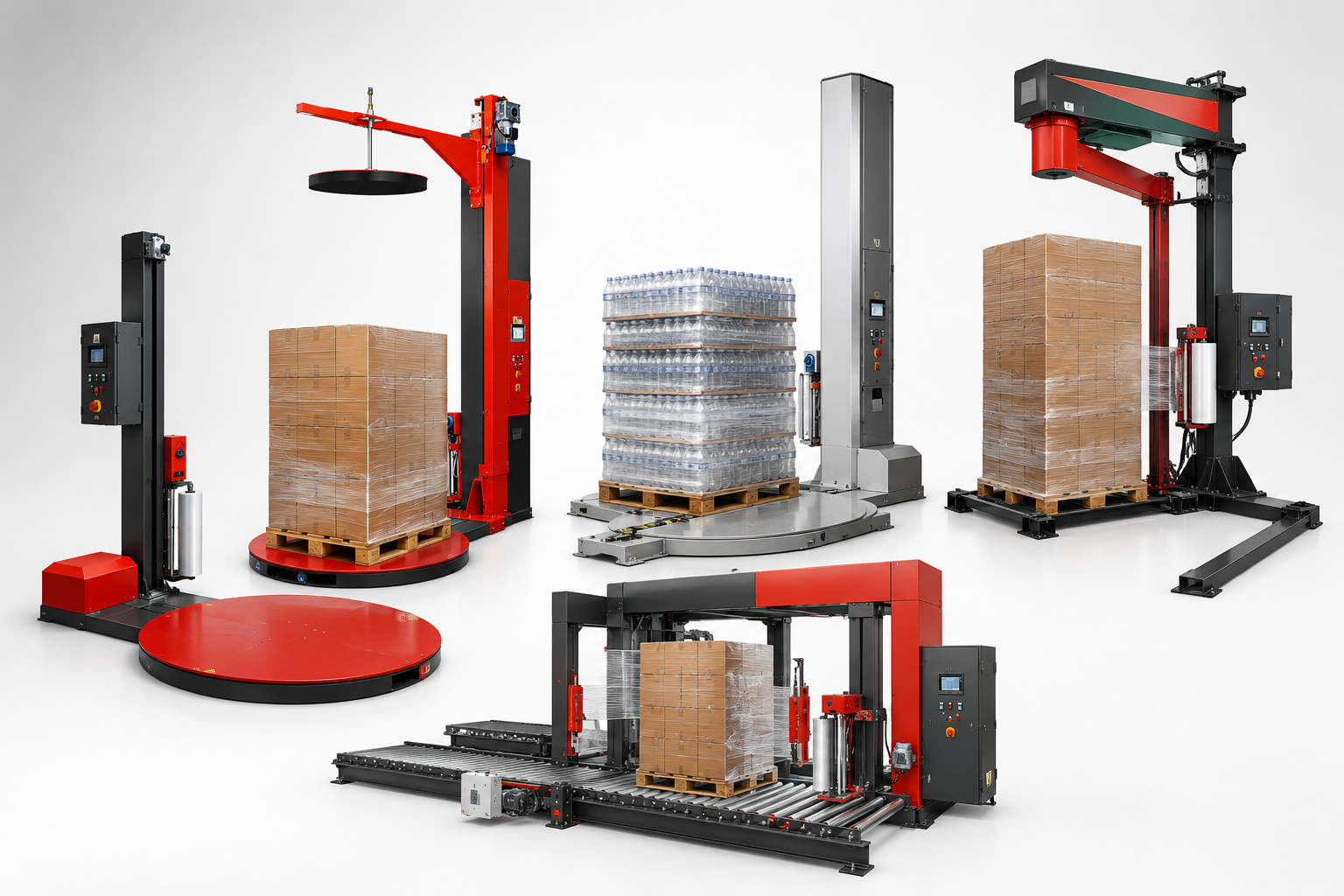
Most wrappers utilize a rotating turntable and a vertically moving film carriage, which evenly wraps the load with a pre-set film overlap. Modern systems can automatically adjust the wrapping program, reduce film consumption, and ensure a consistent result regardless of the operator's experience.
Economical pallet wrappers
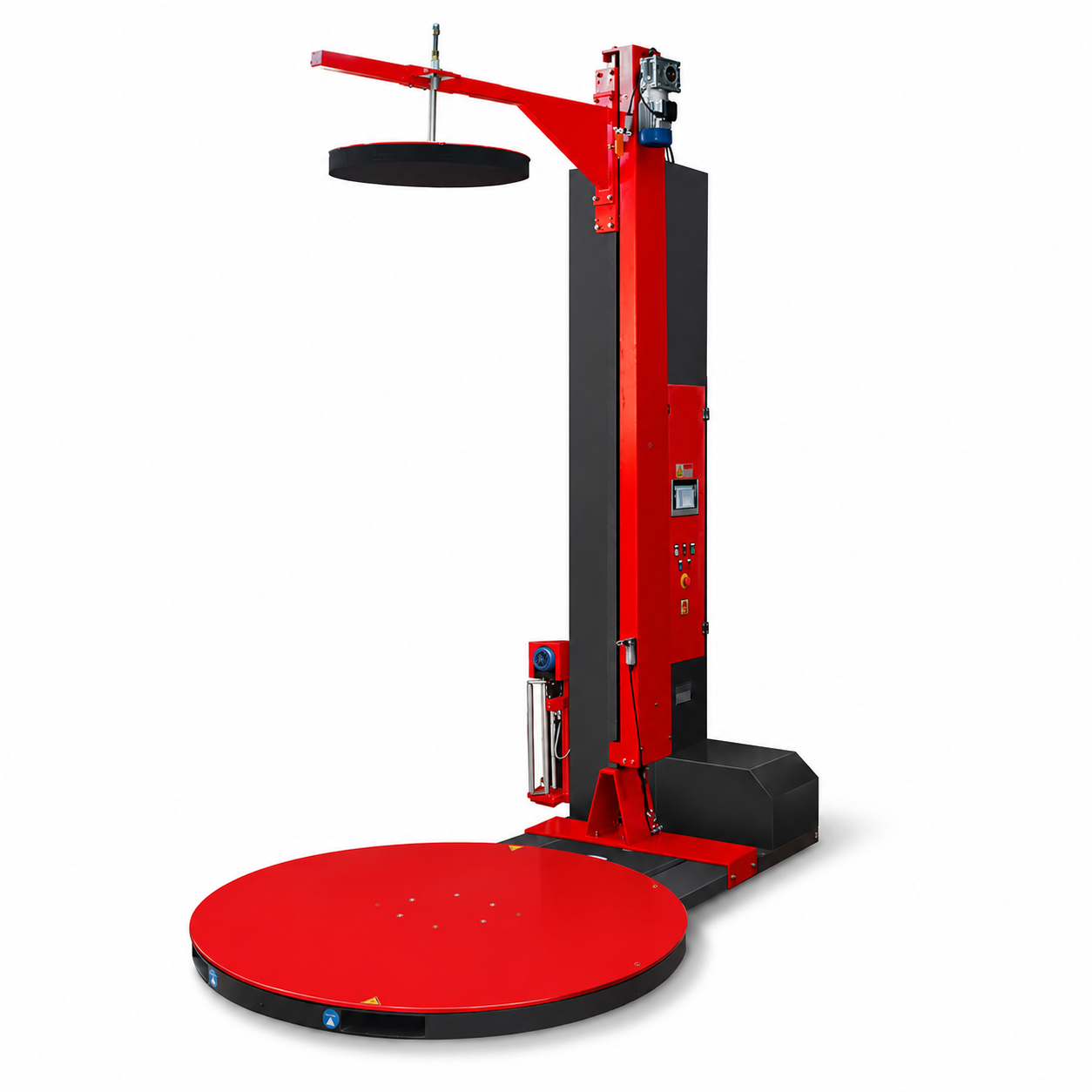
Economical class wrappers are designed for companies looking to automate pallet wrapping without large initial investments. They are suitable for small and medium-sized production facilities where a relatively small number of pallets are prepared daily.
The operating principle is simple – the operator places the pallet on the rotating turntable, attaches the end of the film to the load, and selects one of the pre-set programs. The wrapper's turntable begins to rotate, while the film carriage automatically moves up and down, ensuring an even film coverage across the entire height of the pallet. After completing the cycle, the operator cuts the film and removes the finished pallet.
Compared to manual wrapping, this achieves consistent film tension, reduces physical labor, and significantly improves load stability during transportation. Since each pallet is wrapped using the same program, fluctuations in film consumption between different operators are also reduced.
Typically used in
- Food production
- Woodworking
- Warehouses
- Logistics companies
- Household chemicals production
| Parameter | Typical value |
|---|---|
| Capacity | Up to ~20–40 pallets per day |
| Max. pallet weight | 1500–2000 kg |
| Max. pallet height | 2200 mm |
| Turntable diameter | 1500–1650 mm |
| Film width | 500 mm |
| Pre-stretch | Mechanical or motorized |
| Investment level | € |
In most companies, a manually wrapped pallet is wrapped differently each time. Automatic wrapping ensures identical film coverage and tension for each pallet, which reduces the risk of damage during transportation.
Universal pallet wrappers
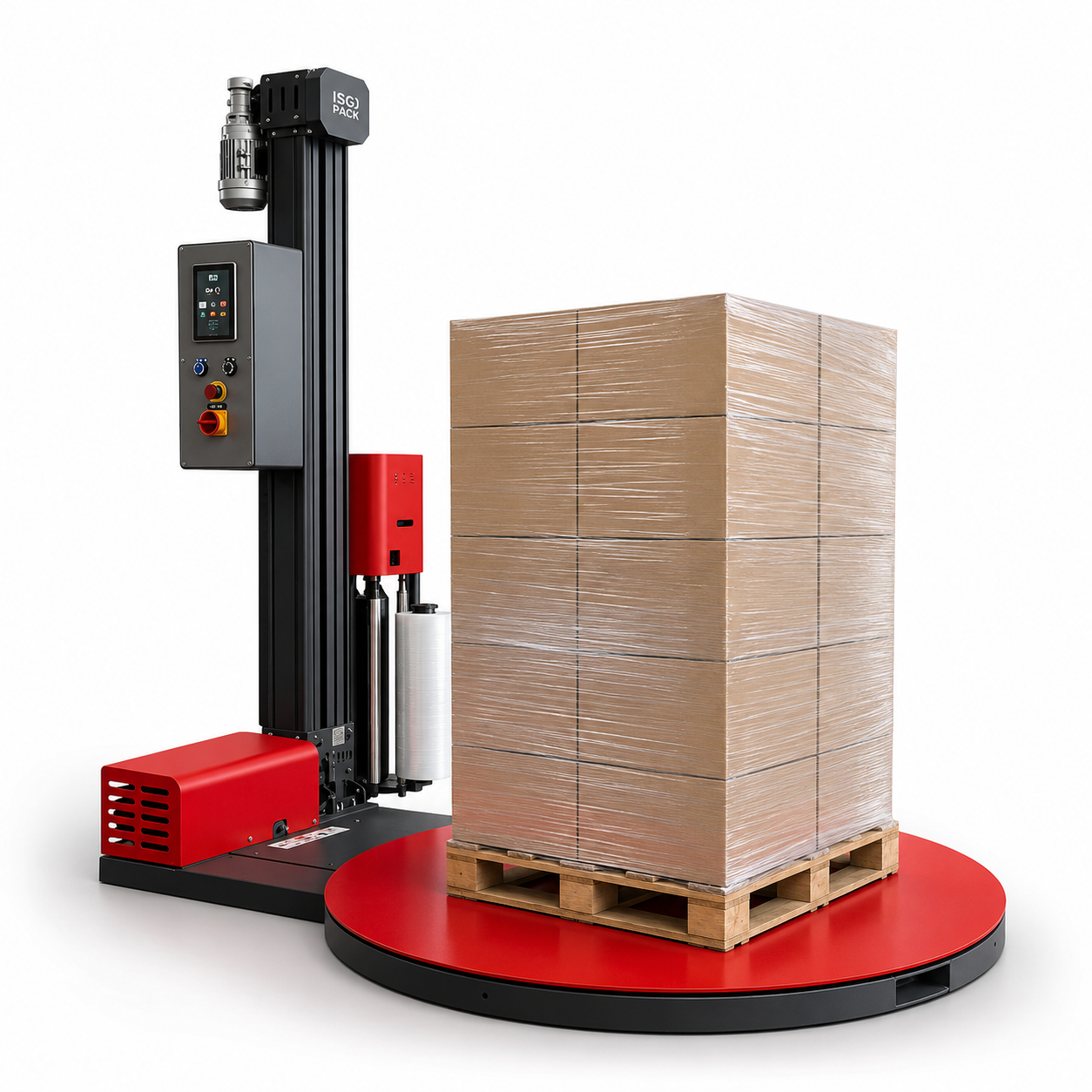
Universal class wrappers are the most requested solution for companies where pallet wrapping is a regular part of the daily process. They are designed for higher workloads, wider configuration options, and lower long-term operating costs.
In addition to automatic wrapping, these machines can be equipped with motorized film pre-stretch, a top press, integrated scales, a larger diameter turntable, or a stainless steel structure for operation in wet or food production environments.
If light or unstable loads are wrapped, such as empty PET bottles, tall cardboard boxes, or plastic containers, the wrapper can be equipped with a top press. It holds the load in place during wrapping and prevents it from shifting due to rotation.
In some configurations, a weighing system can also be integrated. This allows weighing each pallet immediately after wrapping, without additional movement to separate floor scales. Such a solution is particularly useful in logistics centers and companies where weight control is part of the shipping process.
Typically used in
- Dairy production
- Meat processing
- Beverage production
- Logistics
- Pharmaceuticals
- Cosmetics production
| Parameter | Typical value |
|---|---|
| Capacity | 40–120+ pallets per day |
| Max. pallet weight | 2000 kg |
| Max. pallet height | 2400–2800 mm |
| Film pre-stretch | Up to 300% |
| Optional equipment | Top press, scales, stainless steel execution |
| Investment level | €€ |
For companies that wrap dozens of pallets a day, the greatest savings often come not from faster wrapping, but from lower stretch film consumption. Therefore, motorized pre-stretch is frequently one of the most economically advantageous optional equipment choices.
Low profile pallet wrappers
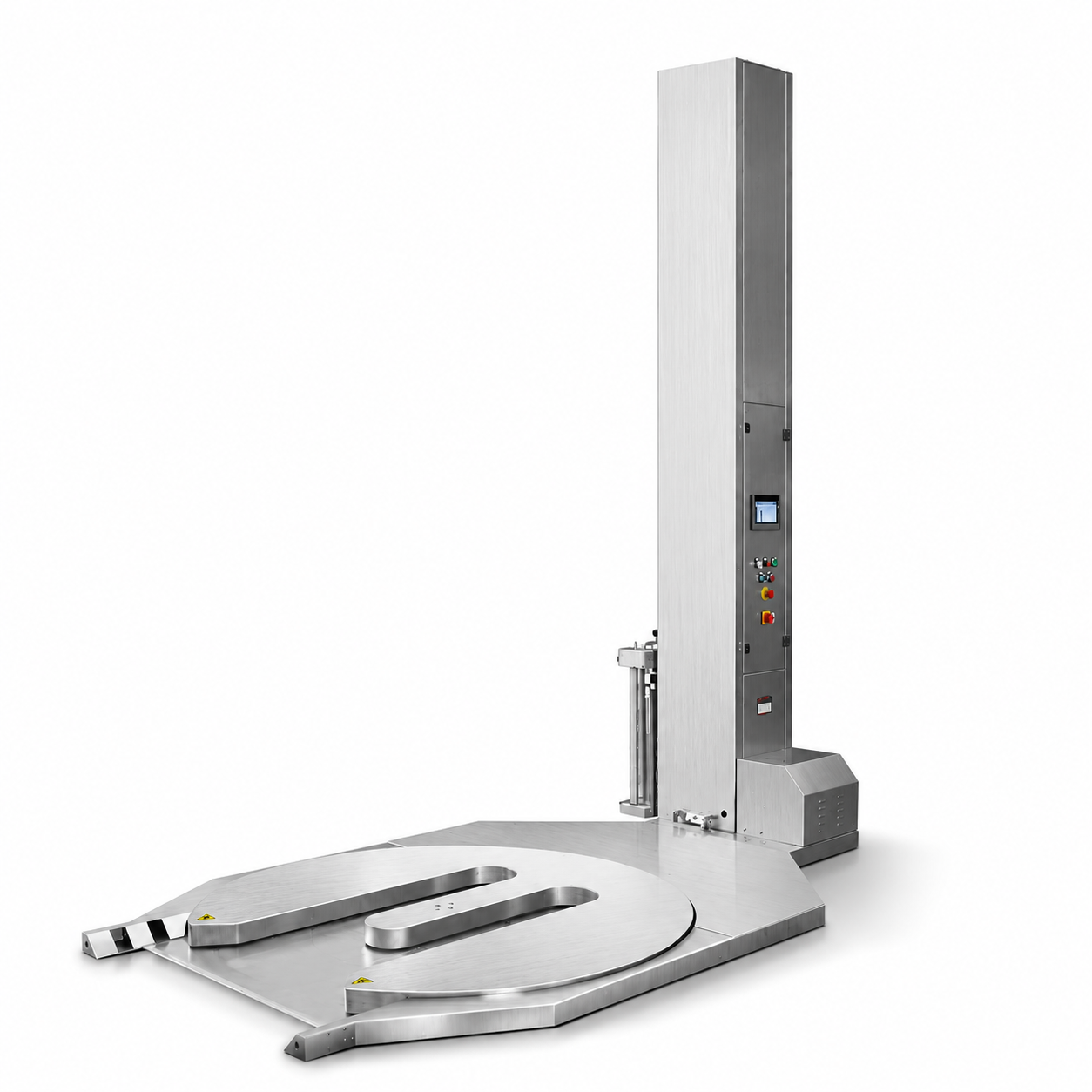
This solution is particularly practical in small warehouses where there is not much free space around the machine. Standard ramps take up extra space and require more maneuvering room, whereas a low profile turntable allows the operator to work faster and more conveniently.
A low profile wrapper is a good solution for companies that do not have a forklift in every work zone or wish to reduce the operator's physical strain. This is especially important if pallets are wrapped several times a day and each push up a ramp takes time.
Typically used in
- Small and medium-sized warehouses
- Small production units
- Dispatch areas
- Food production
- Household goods production
| Parameter | Typical value |
|---|---|
| Table height | Approximately 30–35 mm |
| Loading | With a hand pallet truck |
| Max. pallet weight | 1500–2000 kg |
| Max. pallet height | 2200–2400 mm |
| Film width | 500 mm |
| Pre-stretch | Mechanical or motorized |
| Investment level | €€ |
If pallets are moved with a hand pallet truck, a low profile turntable can save more time than it might seem at first. The operator avoids unnecessary maneuvering up a ramp, physical strain is reduced, and the loading zone takes up less space.
Rotary arm pallet wrappers
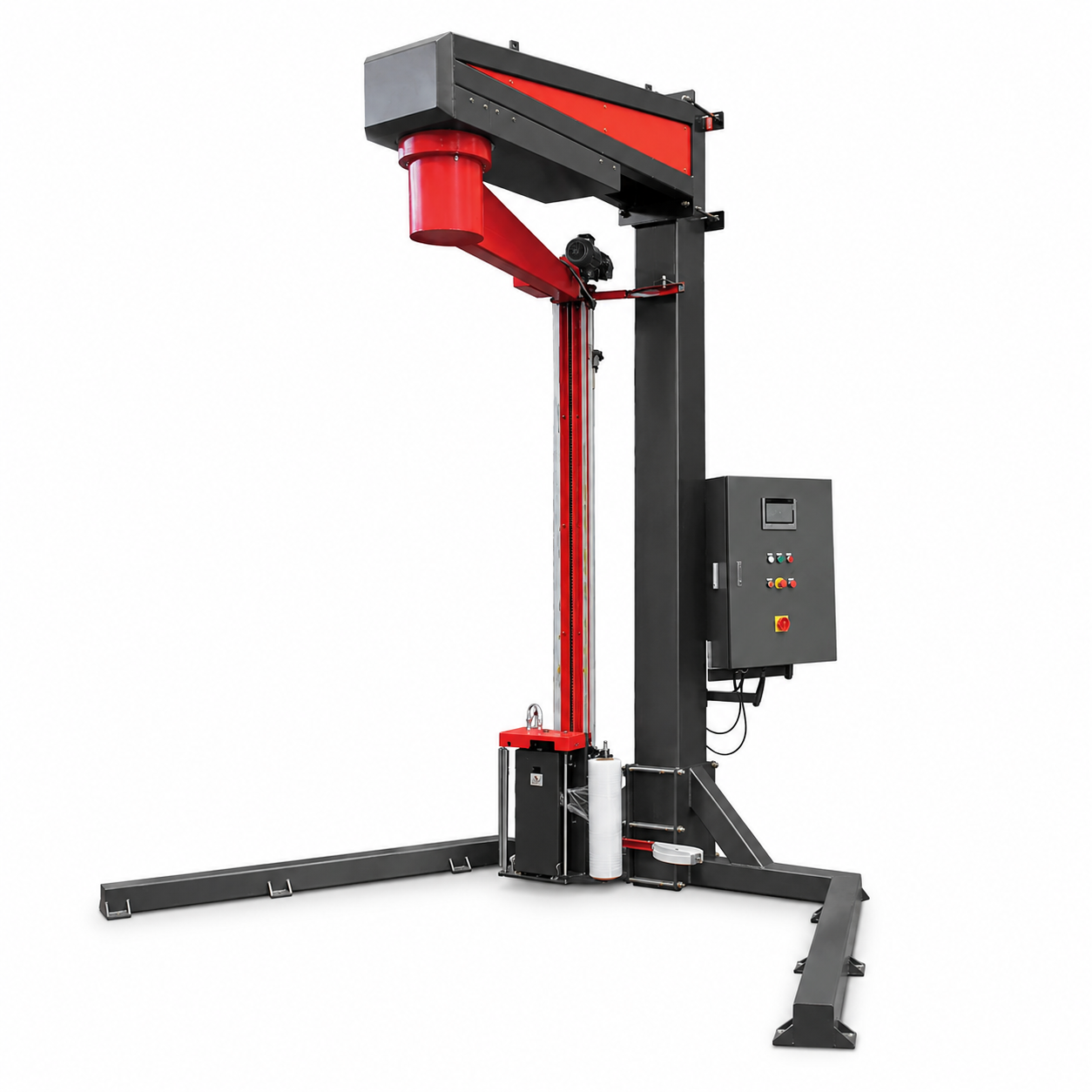
Rotary arm wrappers are designed for situations where rotating the pallet is undesirable or impossible. In this type, the load remains stationary while the wrapper's arm with the film carriage rotates around it.
This operating principle is particularly important for heavy, tall, or unstable loads. If a pallet is stacked with bags, bottles, light cardboard boxes, or products with a high center of gravity, a rotating turntable can cause the load to shift. A rotary arm wrapper eliminates this risk, as no pallet rotation is generated during wrapping.
This type of wrapper is also suitable for extremely heavy loads, as the weight of the pallet is no longer limited by the structure of a rotating turntable. The pallet can be located on the floor, a conveyor, or another transport solution, while the wrapping mechanism works around it.
Rotary arm systems are frequently chosen by companies working with beverage pallets, glass containers, chemical products, construction materials, or other loads where stability during wrapping is critical.
Typically used in
- Beverage production
- Glass containers and bottle production
- Chemical industry
- Construction materials production
- Logistics centers
- Packaging of bags and bulk products
| Parameter | Typical value |
|---|---|
| Pallet movement | Pallet remains stationary |
| Max. pallet weight | Not dependent on the turntable |
| Max. pallet height | Usually up to 2500–3000 mm or more |
| Suitable loads | Heavy, tall, unstable, or easily deformable loads |
| Pre-stretch | Usually motorized |
| Integration | Possible with conveyors and automatic lines |
| Investment level | €€€ |
The taller or more unstable a load is, the greater the risk that it will shift during rotation. A rotary arm wrapper allows securing the pallet without moving the load itself during the wrapping process.
Automatic pallet wrappers
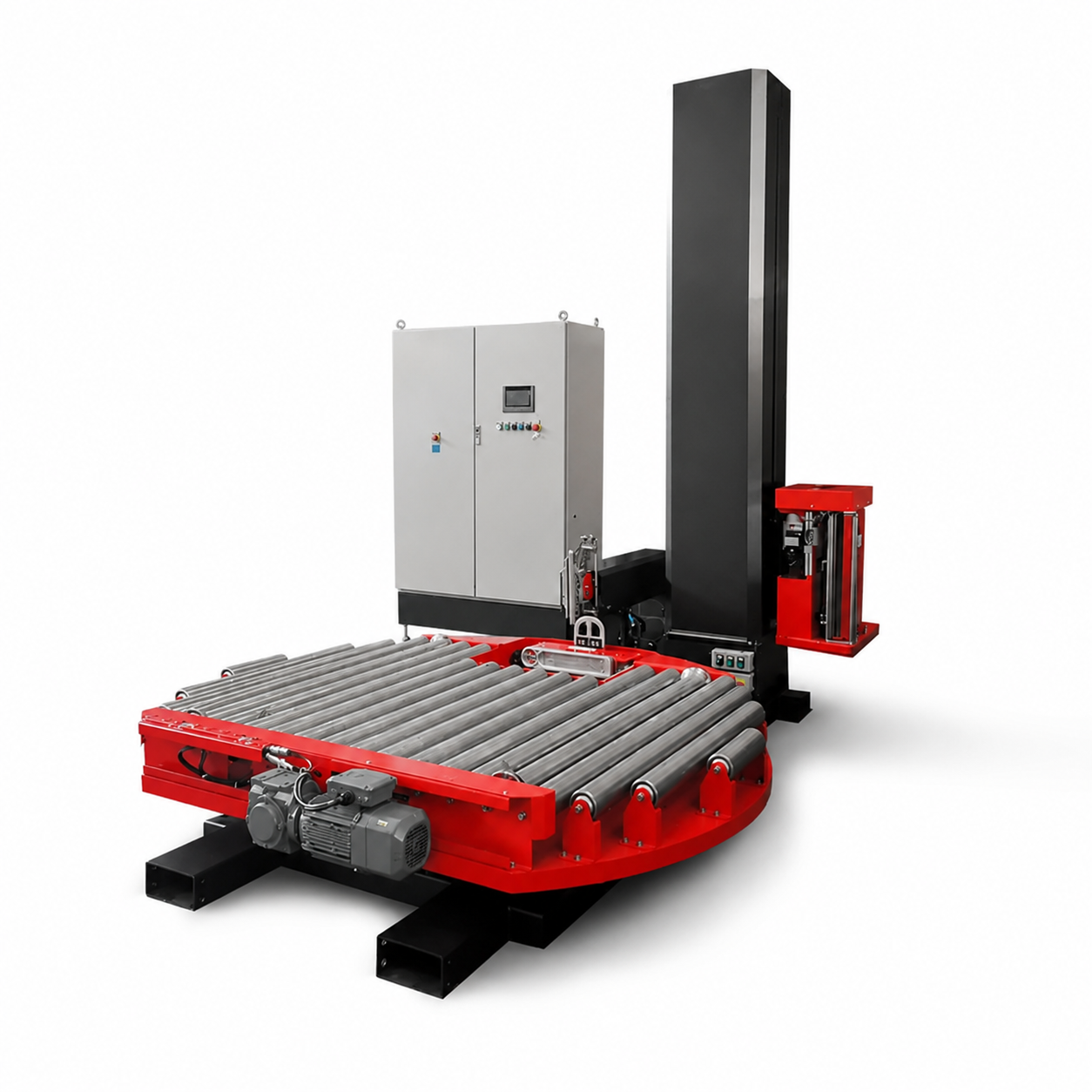
Automatic pallet wrappers are designed for companies with a high pallet flow, where wrapping is part of a continuous production or logistics line. In these solutions, the operator no longer attaches the film, cuts it, or places the pallet on the wrapper – the pallet is fed automatically via conveyors.
The system automatically detects the pallet height, attaches the film, performs the wrapping cycle, cuts the film, and prepares the pallet for further movement down the line. Automatic wrappers can be integrated with pallet conveyors, weighing systems, pallet labelers, automatic warehouse systems, and safety barriers. These solutions are often designed individually, taking into account pallet dimensions, line speed, the required wrapping program, and available space in the production facility.
This type of equipment is suitable for companies where the wrapping process takes place several hours a day or over multiple shifts. Although the initial investment is higher, the benefit comes from reduced operator labor, consistent quality, higher throughput, and lower film consumption.
Typically used in
- Large food production units
- Beverage plants
- Logistics centers
- Pharmaceutical production
- Household chemicals production
- Automated production lines
| Parameter | Typical value |
|---|---|
| Operation | Fully automatic |
| Operator involvement | Minimal or not required |
| Capacity | Dependent on line configuration and wrapping program |
| Film attachment | Automatic |
| Film cutting | Automatic |
| Integration | Conveyors, scales, pallet labeling, warehouse systems |
| Investment level | €€€€ |
An automatic wrapper helps ensure a stable process – each pallet is wrapped identically, the operator is not tied to a single workstation, and pallets can continuously move forward to the warehouse or dispatch area.
Intuitive touchscreen control
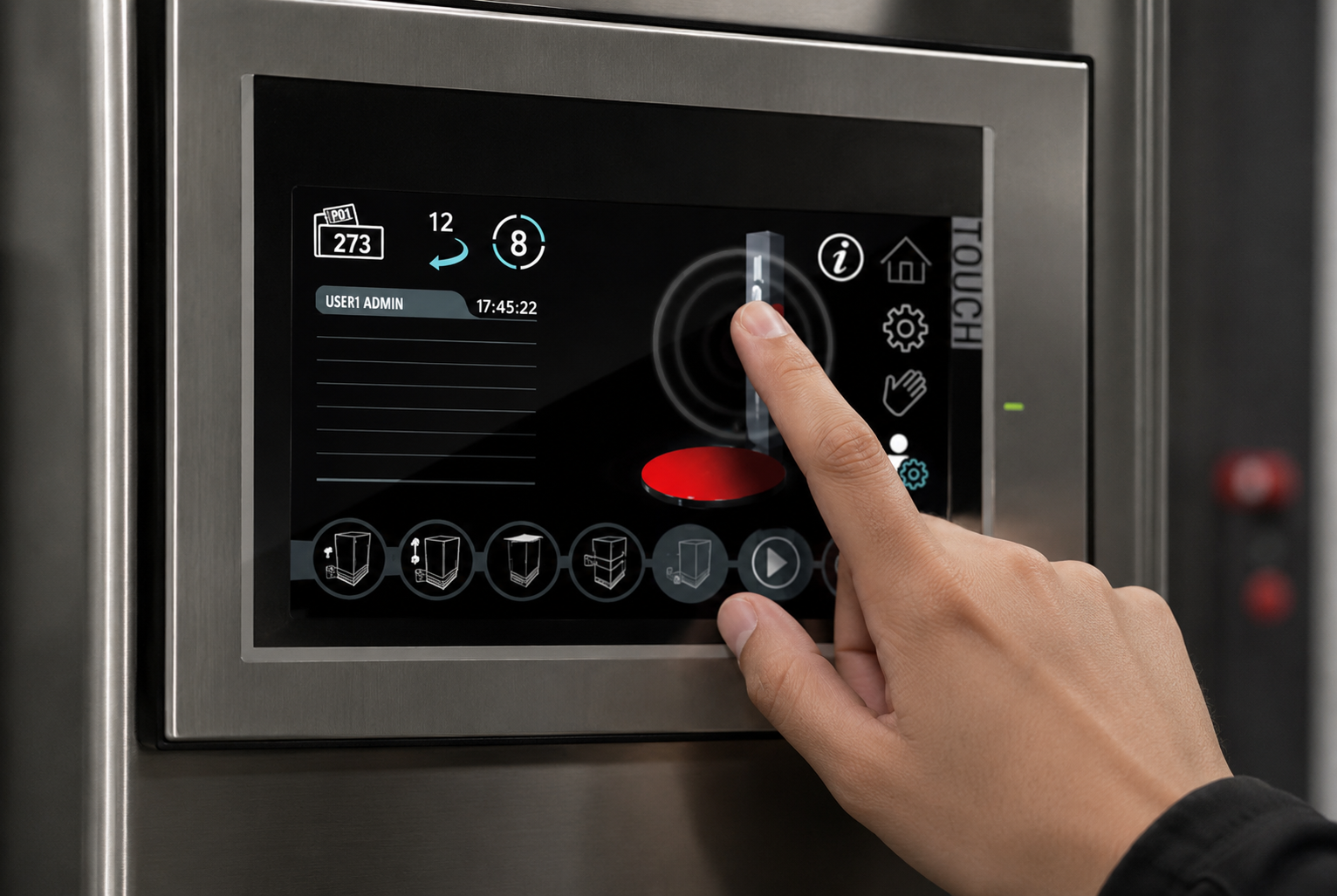
Modern pallet wrappers are equipped with a touchscreen control panel that allows quickly selecting or adjusting wrapping programs according to different products. The operator can set film tension, wrapping speed, the number of top and bottom wraps, turntable speed, and other parameters. The most frequently used configurations can be saved in memory, thereby ensuring quick switching between different products and consistent wrapping quality.
We will help you choose the most suitable solution
We will help evaluate your needs and recommend a pallet wrapper that best fits your production process, ensuring optimal performance, film consumption, and return on investment.
Contact Nord Systems, and together we will find the most suitable pallet wrapping solution for your company.
Nord Systems SIA
Registration No.: 40203048603
VAT No.: LV40203048603
Contacts
Kleistu iela 24,
Riga, LV-1067, Latvia
Tel.: +371 67717575
Mob.: +371 28362084
Email: info@nordsystems.eu